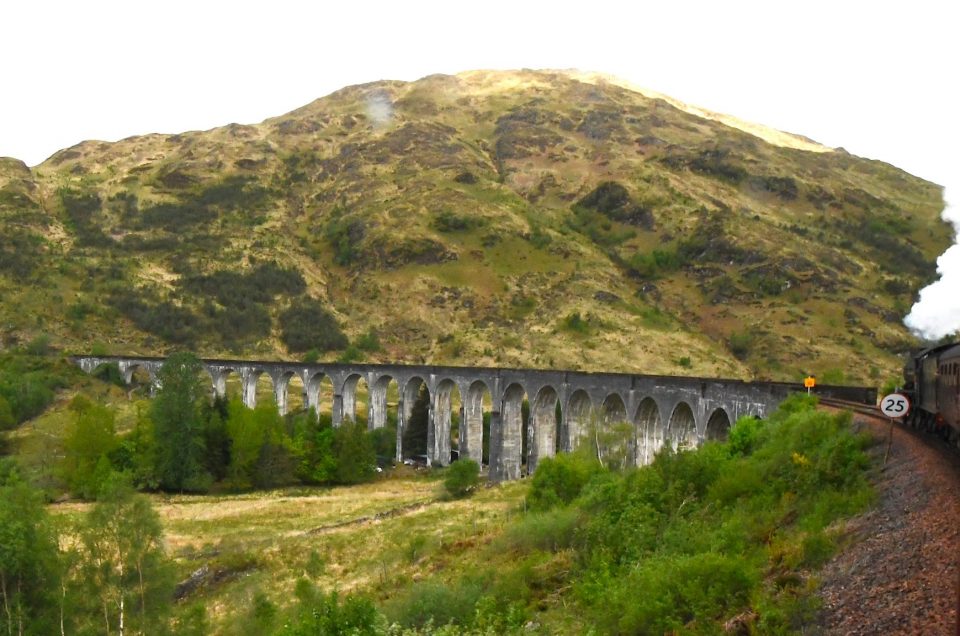
We spent our first day in Edinburgh touring the city by bus and on foot. We settled into a great hotel, we had a great meal, and we had a nice walk to top it off.
Photo Notes:
The featured image shows the entrance to Edinburgh Castle at dusk.

These are posts related to travel events that I’ve taken photos of.
We spent our first day in Edinburgh touring the city by bus and on foot. We settled into a great hotel, we had a great meal, and we had a nice walk to top it off.
Photo Notes:
The featured image shows the entrance to Edinburgh Castle at dusk.
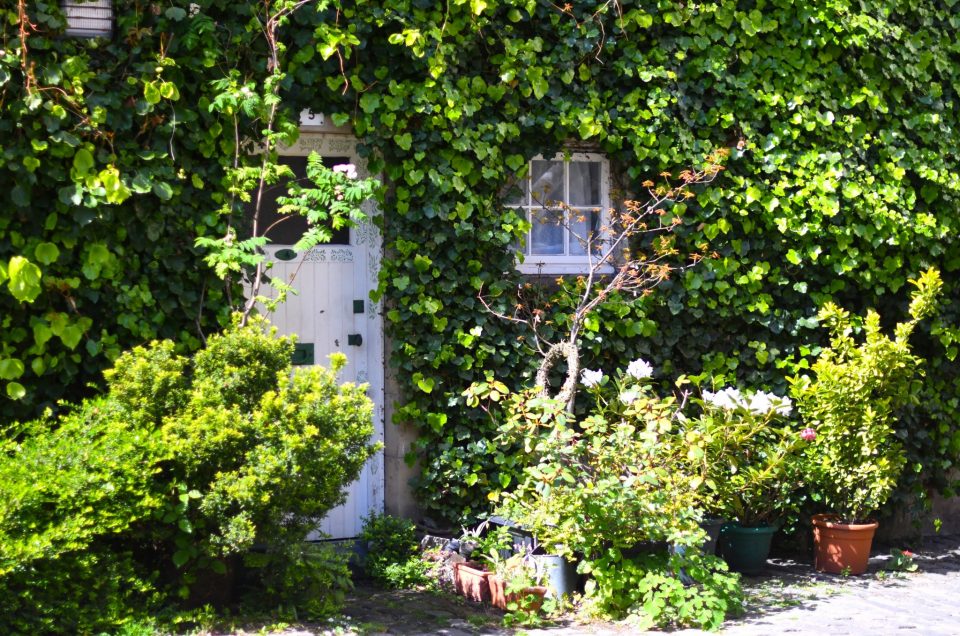
This post describes our experiences on Monday, May 8th, our first full day in Edinburgh. Our activities included a guided bike tour around the city, with frequent stops that allowed me to take some nice photos of the spectacular scenery.
Photo Notes:
This photo was taken at the first stop on our tour, the courtyard of what was originally a 16th century inn, just outside the walled city of Edinburgh. Patty insisted that I take the photo. I think she wanted to make sure that I captured all things ‘quaint’.
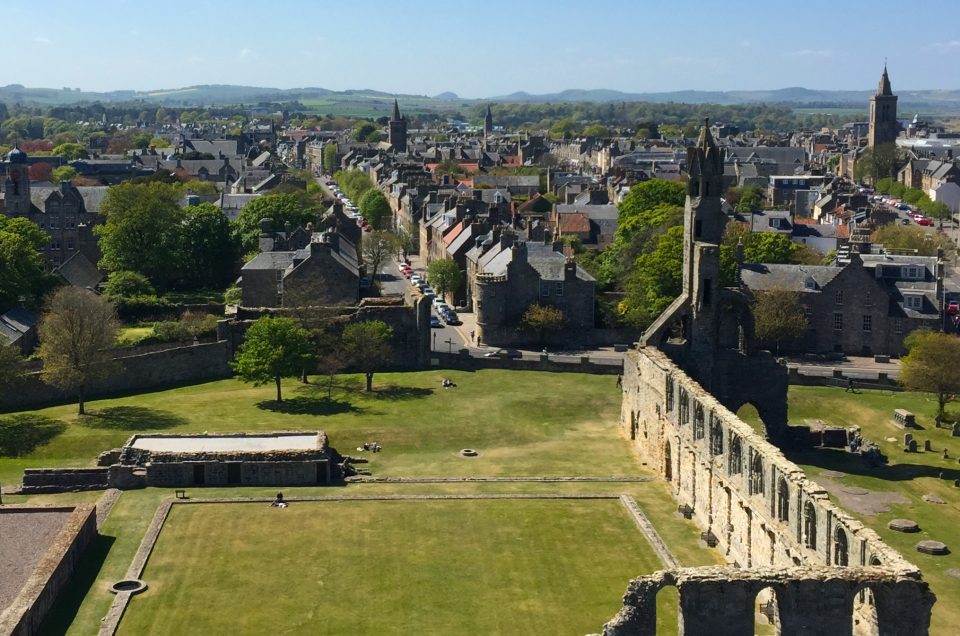
On Tuesday, May 9th, we planned that Bo would drive us all to Saint Andrews, about 1.5 hours to the northwest of Edinburgh, to see the ruins of Saint Andrews Cathedral. It turned out to be one of those ‘postcard’ days, as the posted photos will show.
Photo Notes:
The featured photo shows the view looking west from the top of what is now referred to as Rule’s Tower, which is the only section that remains of one of at least three Roman Catholic churches that had been built on the site of Saint Andrews Cathedral. The first church was founded by the King of the Picts in the 8th century, at around the time that legend says that Saint Rule (also known as Saint Regulus) brought relics of the apostle Saint Andrew to Scotland from Patras in Greece, where he had been crucified. The apostle Andrew was adopted as the patron saint of the Picts, and later of Scotland. The saltire, or X-shaped cross that adorns the Scottish flag, which is believed to be the oldest flag in Europe, is the symbol of Saint Andrew, because it is said that he chose to be crucified on an X-shaped cross, because he felt he wasn’t worthy to die in the same manner as Christ Jesus.
The second church, built around 1130, was the Church of Saint Regulus, of which this tower was a part, and which was retained during the construction of the third church, Saint Andrews Cathedral. Construction began on the cathedral in 1158, and it was consecrated in 1318 in the presence of King Robert I (Robert the Bruce). The Cathedral of Saint Andrew was looted in 1559, during the early stages of the Scottish Reformation, and it fell into disuse starting in 1561, after Catholic mass was outlawed in Scotland. At 391 feet long, it was for some time the largest church to have been built in Scotland
In the distance lies the city of Saint Andrews, with the University of Saint Andrews on the far right.
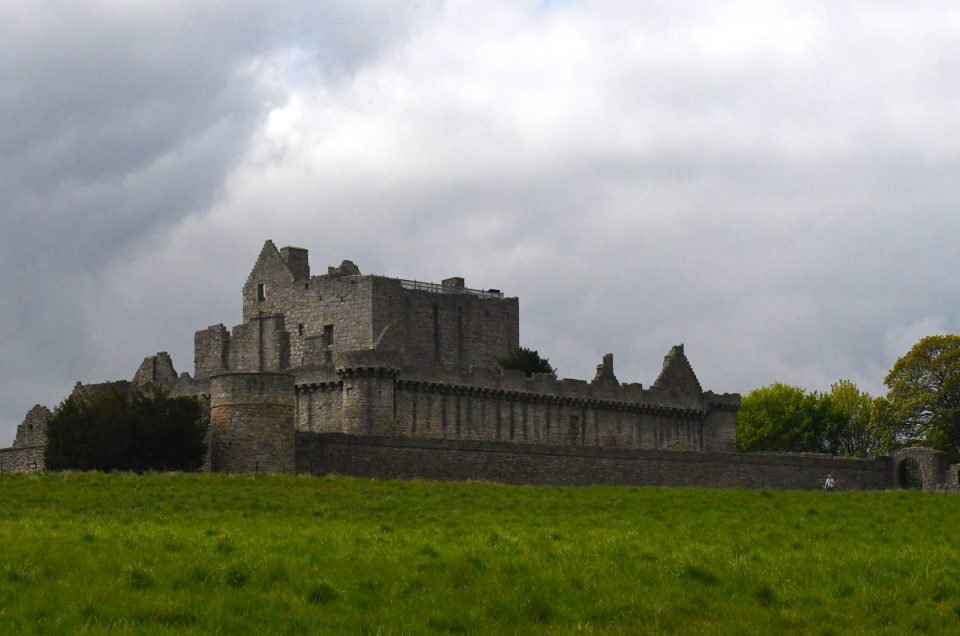
Day 5 (Wednesday, May 10th) was our last day in Edinburgh. Patty and I would be taking a train to Glasgow that afternoon to get ready to start hiking the next day. Bo and Peggy would stay one more night, and then take a taxi north to meet us for lunch on our second day on the trail. But before all that, there would be a full day of interesting discoveries in Edinburgh . . .
Photo Notes:
This photo shows the north side of Craigmillar Castle, from the trail that leads through the town of Craigmillar, and on to Duddingston Village.

On Thursday, May 11th, Patty and I set out by train from Glasgow to Milngavie, the starting point for the West Highland Way.
Photo Notes:
The photo below shows what we were seeing along the first section of the trail. Bluebells. Bluebells everywhere.
It’s Friday, May 12th, and we are hiking to Loch Lomond!
Photo Notes:
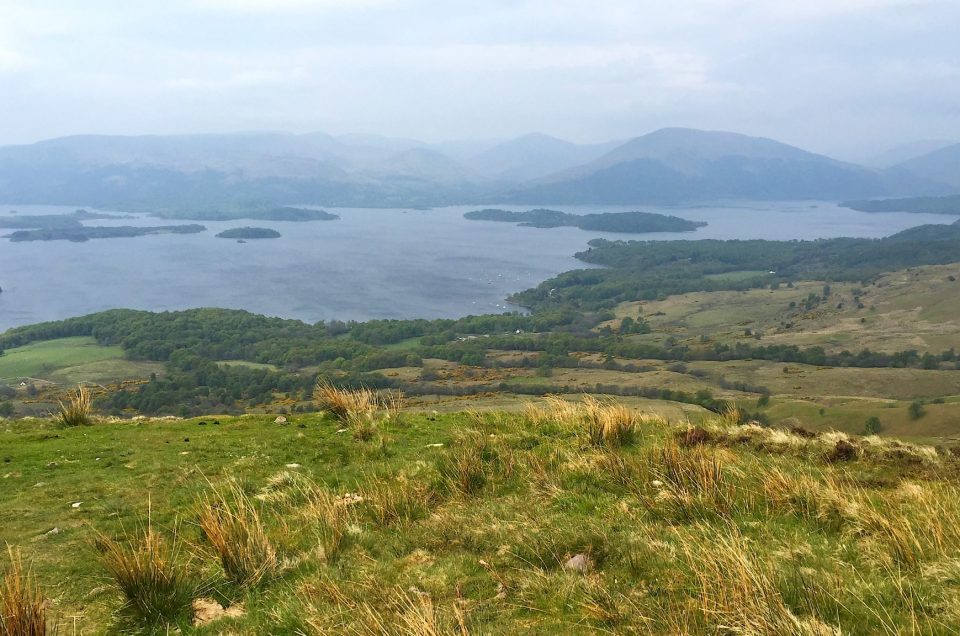
This photo shows the view looking south/southwest towards Loch Lomond from the southwest slope of Conic Hill. Near the center, you can see boats moored just offshore from the village of Balmaha, where we will meet Bo and Peggy for lunch, before hiking north along the shore to Saillochy, the destination for our second day of hiking.

The eighth day of our trip had to be the most challenging.
Photo Notes:
This photo, looking south on the West Highland Way, looks oh so innocent. But note that there are actually two trails, one coming straight down the hill (the one we didn’t take), and one coming up from the shoreline on the right (the one we did take). We intended to take the ‘high road’, but we ended up taking the ‘low road’.
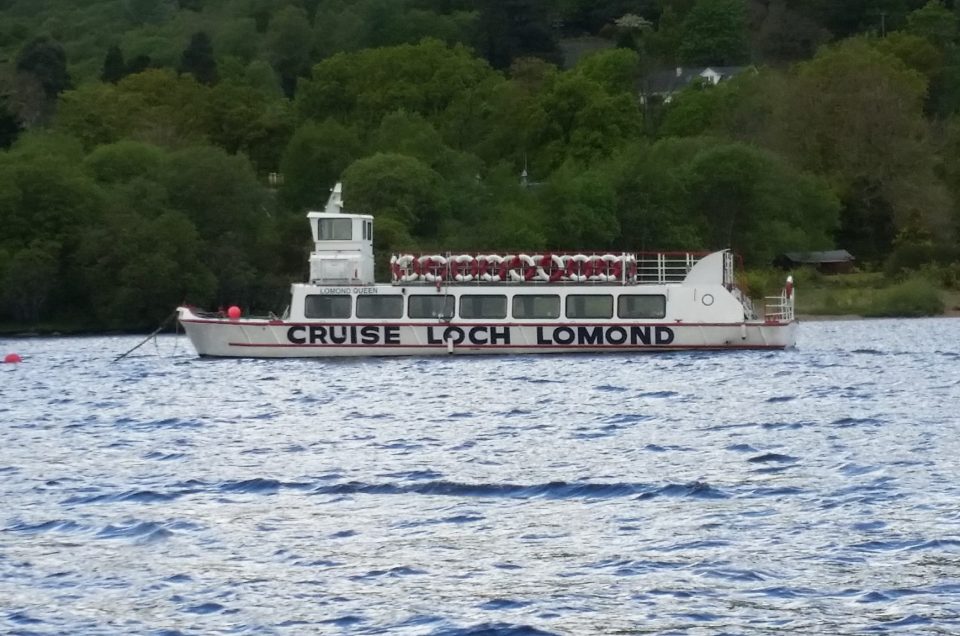
Yes, we took a sightseeing cruise on Loch Lomond, but it was really just to get to the east side, where there was a road that would take us north. Looking back at the photos, its hard to believe that they were all taken the same day.
Photo Notes:
The featured photo is of another moored sightseeing boat, like the one we took. The photo was taken at the pier at Tarbet, where we landed.

Monday, May 15th – just another day strolling through history.
Photo Notes:
Seven hundred years later, it doesn’t look like much, but this structure was built in 1318 as the Priory of Saint Fillan, to honor an evangelical monk who came to Scotland about 650 years before that, to help bring Christianity to the Picts and Scots. In the process, he united them, and helped them form a country.

On Tuesday, May 16th, Bo, Peggy, Patty, and I would hike the 7 miles from Tyndrum to Bridge of Orchy. From there, Bo and Peggy would go straight to our B&B, which was off the trail in Glencoe, while Patty and I would continue on an additional 3 miles to Inveroran. From Inveroran we would take a taxi to meet them at Glencoe.
There were scattered showers in the forecast, and the trail to Bridge of Orchy would provide no shelter. It also provided some of the most beautiful scenery of our trip, equally matched to our drive through Glen Coe.
Photo Notes:
This photo shows Patty on our way down to Inveroran, which is the small group of houses on the right.

Wednesday, May 17th was our last day hiking the West Highland Way, 10 miles through open wilderness, 1,699 feet of ascent, and 1,436 feet of descent. Stopping 24 miles short of the finish is a good excuse to come back.
Photo Notes:
This photo shows …

Exerpt
Photo Notes:
TBD

Between September 17 and October 26, 2016, my wife Patty walked the Camino Frances (French Way), which is a 500 mile pilgrimage from St. Jean, France, over the Pyrenees Mountains and across northern Spain to Santiago de Compostela (roughly the driving distance between Washington, DC and Knoxville, TN). I met her on the trail between Palas de Rei and Portomarin, Spain, and I walked with her for the last four days of her journey. From there, we drove to Finisterre, Spain (“The End of the Earth”), and finally we spent a couple of days in Paris, France, before coming home.